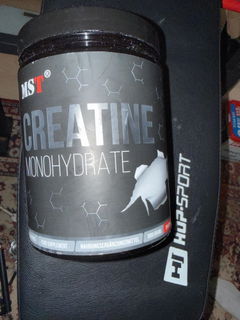
Creatin Kapseln kaufen

Creatine Monohydrate 90 Capsules

373,00 Kč
In stock Pre-order Sold out

Incl. 7% VAT, plus shipping costs. Free delivery for orders over €40. Delivery time: 2–4 business days.

Creatine Monohydrate
(6 )
Large
Large

american expressapple paygoogle paymasterpaypalvisaklarna-pay-latersofortshopify payunionpay
Recommended dosage:

Take three capsules per day with plenty of water. Do not exceed the recommended daily intake.

Ingredients:

Creatine monohydrate, hydroxypropyl methylcellulose, anticaking agents (magnesium salts of fatty acids, silicon dioxide). May contain traces of gluten, egg, soy, milk, and tree nuts.

Reviews
Product safety information

Manufacturer information:

FI Fitness Inspiration GmbH
Kurfürstendamm 167/168
Berlin, 10707
info@mst-nutrition.de

Creatine Monohydrate 1000 mg - 90 Capsules from MST Nutrition: Maximum Power from Germany

Creatine Monohydrate 1000 mg in capsule form from MST Nutrition is your reliable support for greater strength, performance, and muscle growth - developed and manufactured in Germany according to the highest quality standards. With 90 high-dose...

Read more →

FAQ

What side effects does creatine have?

Creatine is a naturally occurring substance that is stored in the body - primarily in the muscles - and plays a central role in supplying muscle cells with energy. It is produced from the amino acids glycine, arginine, and methionine in the liver, kidneys, and pancreas. Through the diet, creatine is mainly obtained from meat and fish. In sports nutrition, creatine - particularly creatine monohydrate - is used to increase physical performance during explosive-power and strength training. It is one of the most extensively researched and effective dietary supplements for muscle building and strength gains.

What is creatine?

Creatine is a naturally occurring substance that is stored in the body - primarily in the muscles - and plays a central role in supplying muscle cells with energy. It is produced from the amino acids glycine, arginine, and methionine in the liver, kidneys, and pancreas. Through the diet, creatine is mainly obtained from meat and fish. In sports nutrition, creatine - particularly creatine monohydrate - is used to increase physical performance during explosive-power and strength training. It is one of the most extensively researched and effective dietary supplements for muscle building and strength gains.

What does creatine do?

Creatine enhances physical performance during short-term, high-intensity activities such as strength training or sprints. It promotes the production of ATP (adenosine triphosphate), the primary energy source in muscle cells, allowing you to train harder and longer. Creatine also supports muscle growth by improving cellular hydration and thereby increasing muscle volume. Many athletes also report faster recovery after training. In short: Creatine naturally boosts strength, performance, and muscle growth.

Which creatine is the best?

The best-researched and recommended form of creatine is Creatine Monohydrate, especially in Creapure®-quality from Germany. It stands out for:

  • Highest purity and safety
  • Very good bioavailability
  • Numerous clinical studies demonstrating its effectiveness
  • Optimal value for money

Other forms, such as Creatine HCL or Creatine Ethyl Ester, are often marketed as “more modern,” but studies show no clear advantages over high-quality monohydrate - yet they usually cost significantly more.

Conclusion: Those who prioritize quality and effectiveness should choose Creatine Monohydrate (e.g., Creapure®).

How much creatine per day at 70 kg?

How much creatine per day at a body weight of 70 kg?

For a person weighing 70 kg, the following recommendation applies:

  • Maintenance phase: 3–5 g of creatine monohydrate daily is more than sufficient, regardless of body weight.
  • Loading phase (optional): For 5–7 days, 0.3 g per kg of body weight daily → approx. 21 g/day divided into 3–4 doses.
  • After that, the normal maintenance dose (3–5 g/day) is sufficient.

A loading phase is not strictly necessary – even with a daily intake of 3–5 g, muscle stores become fully saturated within 3–4 weeks.